 DöpplGrid
Doppelgangers, Twin Strangers, and Lookalikes: Why Everyone Has One
Almost everyone has had the moment: a stranger walks by and, for half a second, you're certain you know them. A friend sends a photo of someone you've never met and asks "isn't this basically you?" People have been calling this feeling a lot of different things for a long time — a doppelganger, a twin stranger, a lookalike, or simply "someone who could be my double." Whatever you call it, the underlying question is the same: is there really someone out there who looks like you, and how would you ever actually find them?
Where the word "doppelganger" comes from
"Doppelganger" comes from German, roughly translating to "double-walker" — originally used in folklore to describe an uncanny double of a living person. Today it's used much more casually: it just means someone who looks enough like you that people mix you up, or that a photo of them gets sent to you as a joke. The "twin stranger" phenomenon — internet communities built entirely around people trying to find their own look-alike among millions of strangers — shows just how common the fascination actually is.
Why do unrelated people end up looking alike?
Human faces are built from a surprisingly small set of underlying variables — the spacing of your eyes, the shape of your jaw, the proportions between your nose, mouth, and brow. With billions of people on Earth all drawing from that same limited set of building blocks, genuine lookalikes aren't actually rare — they're a matter of probability. Researchers who study facial recognition have found that truly unrelated "twin strangers" can share enough underlying facial geometry to fool both humans and cameras, even with zero family connection between them.
How do I find my twin or doppelganger?
Before facial recognition technology existed, trying to find my twin mostly meant hoping a friend spotted one for you, or scrolling through crowdsourced lookalike forums by hand. It wasn't a search you could actually run — it was luck.
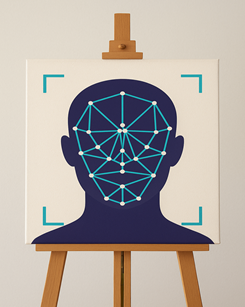
That's the specific problem DopplGrid is built to solve. Instead of hoping to stumble across your lookalike, DopplGrid maps your face into a set of precise measurements and compares them against everyone else who has enrolled on the network, ranking every match by how close the resemblance actually is. It turns "I bet someone out there looks like me" into an actual, searchable answer — and does the same thing in reverse, letting you find photos of yourself that other people have uploaded, using the same face-matching technology.
Twin stranger vs. relative lookalike
It's worth separating two different things people mean by "lookalike." One is a resemblance within your own family — siblings, cousins, parents — where shared genetics make the similarity unsurprising. The other is a true "twin stranger": no family connection at all, just coincidental facial geometry. DopplGrid's matching works the same way for both — you can compare your similarity score directly against friends and family you already know, or search the wider network for a genuine, unrelated twin stranger you've never met.
Is there an actual lookalike finder, or just luck?
Most "lookalike finder" results online are actually celebrity look-alike generators — upload a selfie and see which famous face you resemble most. Fun, but it's comparing you against a few thousand public figures, not against real people who might actually be searchable. A genuine lookalike finder needs a real network of enrolled faces to compare against, which is the part celebrity-matching tools skip entirely. DopplGrid's network is built from real people who enrolled their own face on purpose, specifically so a lookalike search can return someone you could actually find, message, or compare notes with — not just a celebrity's name.
Matching works the same way in reverse, too: DopplGrid can also find photos of yourself that other people posted — from events, parties, or any crowded public place — using the same face-mapping technology, not tagging or guessing.
Try it yourself
Curious how many doppelgangers, lookalikes, or twin strangers might already be waiting to be found? Enrolling takes a couple of minutes, and DopplGrid is free on Android and right here on the web.