 DöpplGrid
Find Photos of Yourself That Other People Posted
You were at the concert, the wedding, the conference, the street festival — and somewhere in a stranger's camera roll, there's a photo with you in the background. Maybe they posted it. Maybe they never will. Either way, you'll probably never see it, because nobody tagged you, nobody knows your name, and there's no way to search for "photos I happen to be in" the way you'd search for anything else online.
Why most photos of you online are ones you'll never see
Tagging only works if the person posting the photo knows who you are and bothers to tag you. Most of the time, neither is true — event photographers, other attendees, and random passersby post photos from crowded places constantly, and the people caught in the background almost never find out. It's not that the photos are hidden; it's that there was never a way to connect "a photo exists with your face in it" to "you, specifically," unless someone happened to recognize you and reach out directly.
How DopplGrid finds these photos for you
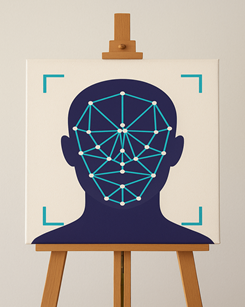
DopplGrid closes that gap using the same face-mapping technology behind its doppelganger matching. Once you've enrolled your own face, you can run a Find Yourself search at any time — DopplGrid compares your face-map against every photo uploaded to the network and surfaces anything that matches, regardless of who posted it or whether they tagged anyone at all. It works in reverse too: when someone else uploads a photo from an event, DopplGrid quietly checks it against enrolled faces, so a match is already waiting the next time you search, instead of you having to stumble across the right post by luck.
Isn't this surveillance? How it actually stays consent-based
This is the part worth being precise about, because it's easy to describe this feature in a way that sounds invasive, and that's not what it does. A face detected in an uploaded photo that doesn't resemble anyone already enrolled is discarded immediately — never stored, never identified, never kept "just in case." If a face does resemble someone enrolled, it's held as an anonymous match with no name attached, and it only ever gets connected to a real identity if that specific person runs their own search and confirms it themselves. Nobody is ever notified that they appear in a photo. Nobody's identity is revealed to the person who posted it, or to anyone else, as a side effect of someone else's upload. The only way your identity and a photo ever get linked is if you look for it yourself and say "yes, that's me."
This isn't a reverse image search
Tools like a reverse image search work by crawling the open web — any site, any photo, indexed the same way a search engine indexes text. DopplGrid works entirely differently: it never scrapes, crawls, or imports anything from the public internet. Every photo it can possibly match against is one a real, registered DopplGrid user chose to upload to the network themselves. If a photo of you exists on some other website or social platform entirely outside DopplGrid, this won't find it — by design, not as a limitation. The search space is the DopplGrid network, not the internet at large.
Try it yourself
If you've ever wondered whether a photo from some crowded event already has you in it, enrolling takes a couple of minutes, and DopplGrid is free on Android and right here on the web.